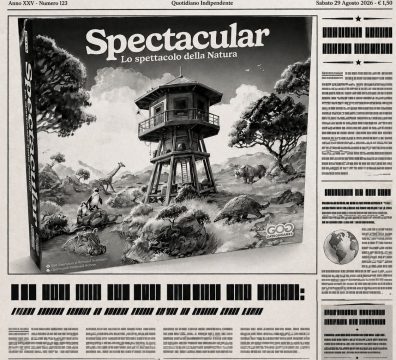
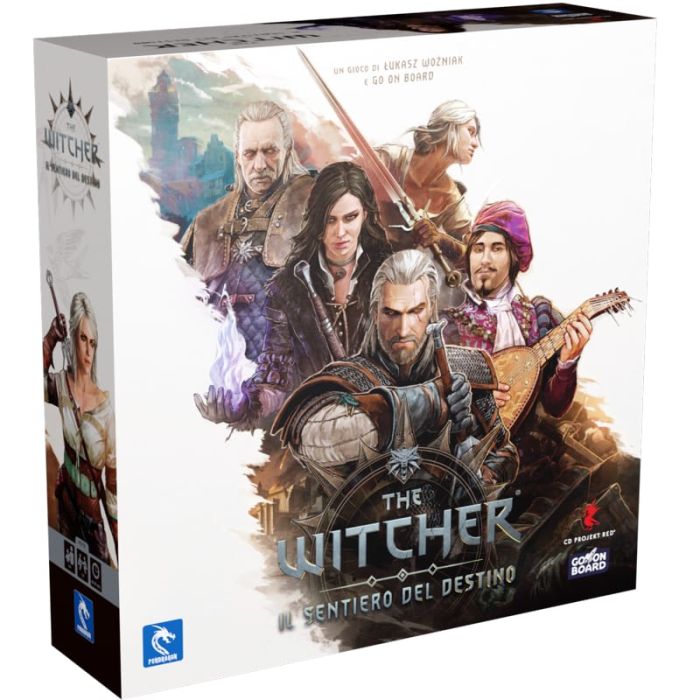
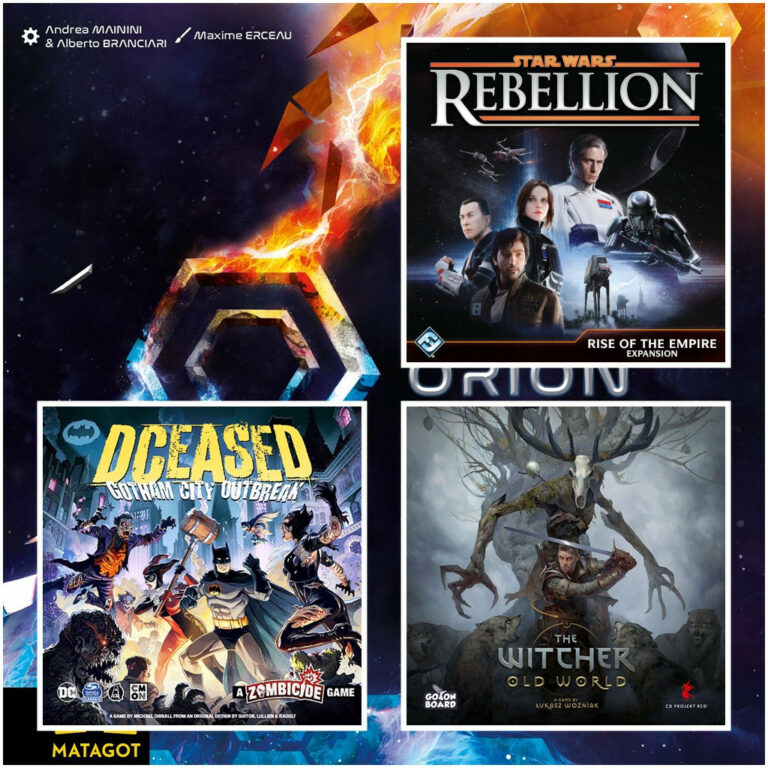
Ten years ago, in Poland, three friends with a board game shop and a few projects gathering dust in a drawer decided it was time to stop publishing for others. What followed is a story the board game market knows well: Go On Board is today one of the most recognizable European studios in the industry, with a catalogue built around gaming experiences with a strong narrative identity and high-impact components. Their latest crowdfunding campaigns have redefined the benchmarks of the genre, while also throwing down the gauntlet to another giant — also Polish — like Awaken Realms.
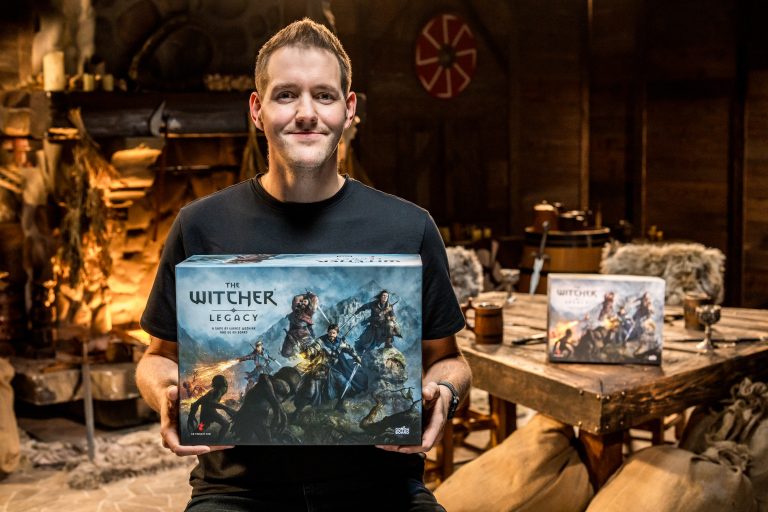
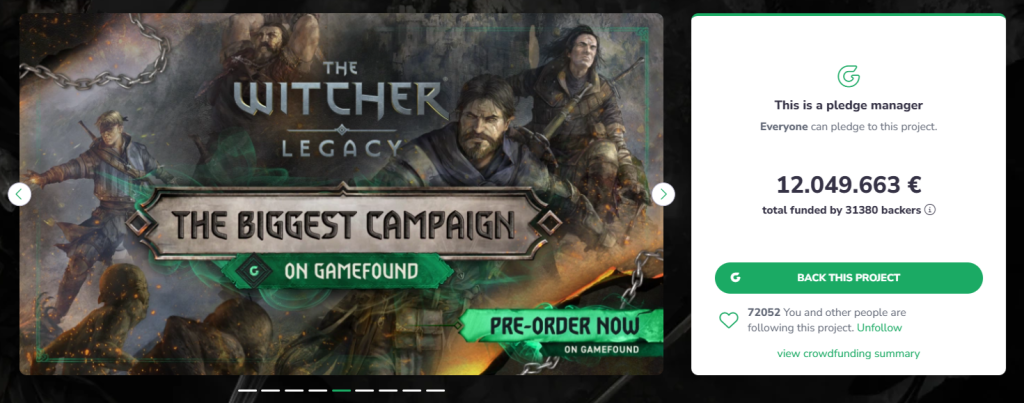
Their latest project, The Witcher: Legacy — with 71,000 followers before launch — hit its funding goal in 4 minutes, an absolute record on Gamefound. We spoke with Łukasz Woźniak about origins, the creative model, the partnership with CD PROJEKT RED, and what it means for a studio that has already proven it can play at the highest level to keep raising the bar.
This content is an exclusive of Giochi Sul Nostro Tavolo!
I. The Origins
Go On Board was founded in 2015 in Poland. How did the idea come about, and who was there that day?
The idea didn’t come from a single moment — it developed naturally over time. Everything started from a deep involvement in the world of board games: playing, reviewing, and gradually creating our own designs. At that stage, the hobby looked very different from today. Many games weren’t even available in Polish, so part of the experience involved translating rulebooks, sharing games with friends, and building a small community around them. Later, together with two university friends, we founded a board game shop. That was an important phase, because it brought us closer to players and to the market, while at the same time we were already working on our own projects. Some of these were published through other publishers, but many stayed “in the drawer” — which eventually led to a simple conclusion: if we wanted to make the games we believed in, we would have to start publishing them ourselves. Go On Board was founded by that same core group, after years of collaboration in various forms. It wasn’t really a single defining moment, but a natural next step: taking everything we had learned and building something of our own — this time as a studio focused on creating and publishing our own games.
You have described yourselves as an “adventure-driven studio.” Is that a creative statement or a market positioning?
It genuinely comes from the way we like to build games. We’ve always been drawn to experiences that feel like a journey — something that grows over time, with decisions, consequences, and a sense of progression that stays with players even after the game is over. At some point we realized that’s also how people see our games from the outside. It wasn’t something we deliberately tried to define as positioning — it became that naturally. It reflects both our design approach and what players now expect when they see a project with our name on it.
How were the early years?How were the early years? Was there a moment when you realized it was really working?
Our first years were primarily a learning curve, where each project went one step further than the last. Even then we treated our games seriously — not as side experiments, but as something we wanted to grow in a long-term direction. We were also still learning to connect all the pieces: design, production, and the business side.If there was a moment that shifted our perspective, it was The Witcher: Old World. The enormous scale of the campaign and the global response showed us that what we were doing could reach results well beyond our initial expectations. That’s when it became clear we were no longer just working on individual projects — we were building a studio capable of distributing games internationally.

II. The Go On Board Model
You chose crowdfunding as your main channel from the start. Was that a choice born of necessity or vision?
Crowdfunding has been a conscious choice for us from the beginning. It fits the way we think about games — not as finished products, but as projects that grow through dialogue with players. Instead of developing everything behind closed doors and revealing the result only at the end, we can build the game together with the community, test ideas early, and respond to feedback while it still matters. It also naturally pushes us to think globally and more transparently from day one. What we are designing is not just the mechanics, but the entire experience around the game — how it is presented, understood, and received by players across different markets. Crowdfunding gives us the space to do that while staying close to the people who will ultimately sit down at the table and play.
First Kickstarter, then Gamefound. How does the relationship with your community change when you move from one platform to the other?
The core of that relationship didn’t really change. From the beginning, we’ve treated the community as an active part of the process rather than just an audience. Backers comment, question decisions, suggest solutions, and very often influence the final shape of the game. That mindset stays the same regardless of the platform.
What evolves over time is the scale and the intensity of that dialogue – with each project, the community grows, expectations are higher, and the conversation becomes more complex. Moving to Gamefound felt natural for us, as it’s built specifically for board games and better supports the kind of campaigns we run, but in the end, the platform changes, and the relationship stays exactly the same.
How much does community feedback actually shape a game during development? Can you give a concrete example where it changed something substantial?
Community feedback have a very real impact on the final shape of our games. Sometimes it’s about refining details, but there are also cases where it leads to major design decisions.
A good example from our latest campaign, The Witcher: Legacy, involves legacy mechanics. Early on, we were considering more permanent, one-time changes, but feedback from the community clearly showed that players value the ability to replay the campaign and explore different paths. This led us to design the system in a way that preserves the feeling of meaningful choices and change, while still allowing the game to be reset and experienced multiple times.
How do you choose a license? Is there a formal process, or is it more a matter of passion?
It’s a combination of both, but passion is usually where it starts. We tend to work with worlds that we genuinely care about, because with projects of this scale, you’re going to spend years inside that universe. Without that connection, it would be incredibly hard to stay consistent and deliver something that feels authentic.
Of course, it has to make sense from a design perspective too. Not every IP translates well into a board game. We look for worlds that naturally support strong gameplay – exploration, character development, meaningful decisions. A well-known license can open the door, but in the end, it’s the quality of the experience that decides whether players stay with the game.
III. The Witcher Legacy
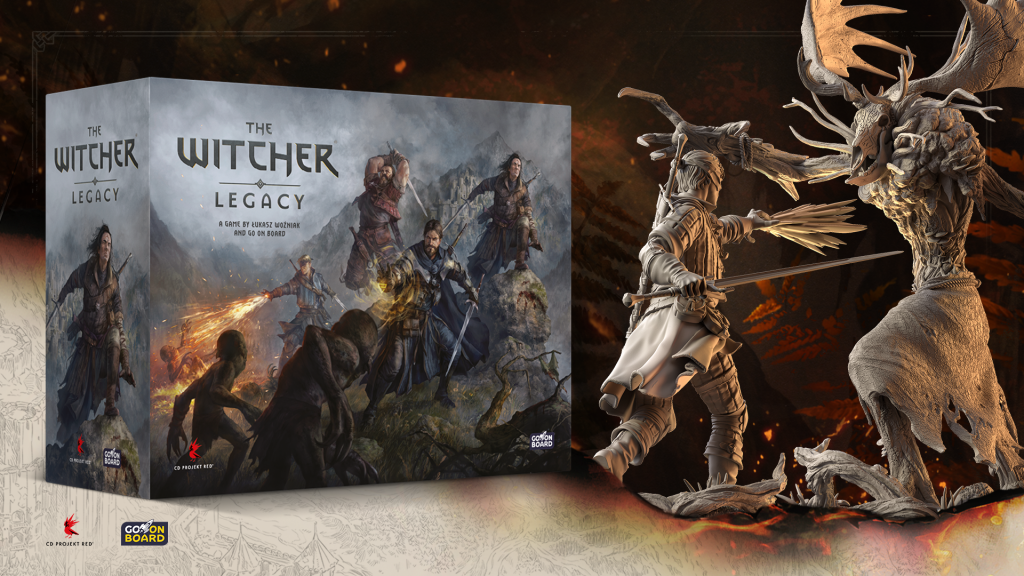
The Witcher Legacyis your third collaboration with CD PROJEKT RED in The Witcher universe. How did that first contact happen – who reached out to whom, and what convinced both sides to take the leap? How does a creative partnership evolve over time with such a major partner?
The first contact happened when CD PROJEKT RED began exploring the idea of expanding The Witcher universe into tabletop. At that point, I had already spent years building a presence in the board game space through content creation and game design, so when they were looking for someone strongly associated with that part of the industry, that naturally led to our first conversation.
What convinced both sides to move forward was a shared belief that The Witcher had real potential as a premium tabletop experience if approached with the right ambition. Since then, our partnership has evolved with every project. Today, it’s a truly collaborative process – we work together not just on approvals, but on storylines, worldbuilding, and the broader creative direction of each project.
The campaign surpassed 71,000 followers before launch – an all-time record on Gamefound – and hit its funding goal in four minutes. Did you see that coming?
We knew the interest was huge going into launch, but with crowdfunding there is always a gap between following a project and actually backing it, so results on that scale are never something we take for granted. Watching the campaign perform like that in real time was surreal and incredibly energizing for the whole team. It was also a clear reminder that behind those numbers are thousands of people placing their trust in the project.
The Witcher Legacy introduces true legacy mechanics – permanent changes to cards, maps, and boards. That’s new territory for you. How challenging was the design process?
The Witcher Legacy draws strong inspiration from classic legacy games, but during development we ultimately moved away from fully permanent, destructive mechanics. Feedback from our community made it clear that players strongly valued replayability, so we redesigned the system to preserve the feeling of lasting consequences without requiring irreversible changes to the components. That shift became one of the biggest design challenges in the entire project. We had to create a system where decisions still feel meaningful and the campaign evolves based on player choices, while making sure the game can be reset and explored again through different paths. Balancing those two goals required a huge amount of iteration throughout development.
Setting the story before the era of Geralt is a bold choice. How did you work with CDPR to build a narrative that is canonically solid yet creatively free?
Setting the story in that period gave us a rare balance of freedom and responsibility. We were working around known events from Witcher lore, but in a part of the timeline that had never been explored to this extent, which gave us room to tell a major new story without conflicting with established characters or narratives.
From the start, the story was developed closely with CD PROJEKT RED and with strong respect for the broader Witcher canon – including the foundations established in Andrzej Sapkowski’s books. Together, we worked to ensure the narrative feels authentic to the universe while still bringing something genuinely new to it. We hope players will feel just how much care went into honoring this world!
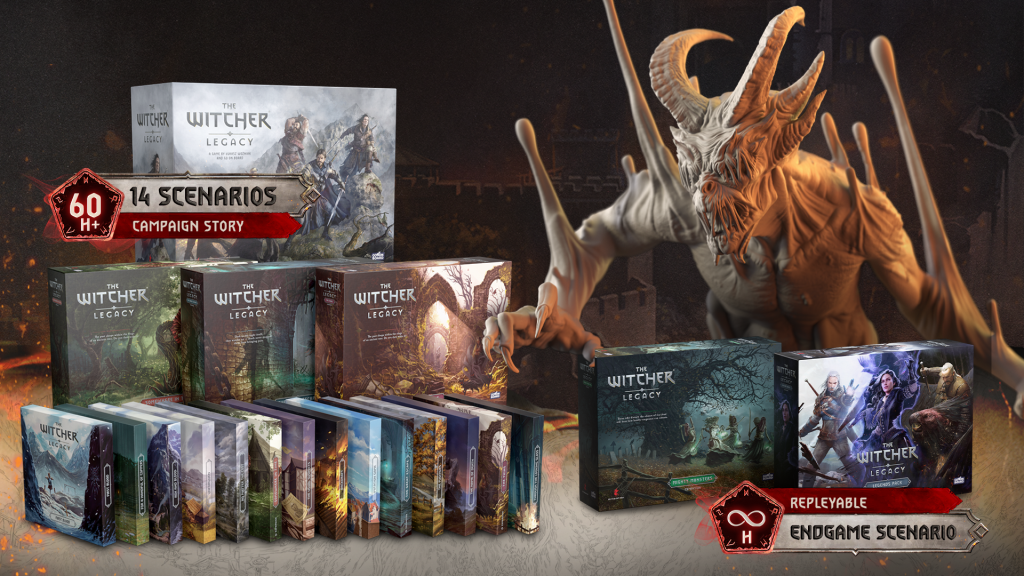
The Gorgon – an exclusive creature, never seen in the video games – is an interesting signal. Do you have genuine creative space within the license?
To some extent yes – and the Gorgon is a great example of that. It comes from the broader Witcher lore, but had never been fully explored visually or interactively before, which gave us the opportunity to develop and interpret it together with CD PROJEKT RED for this project. Working within a major IP comes with boundaries, but there is real creative space to explore lesser-known parts of the universe and bring elements to fans that they may have heard about before, but never had the chance to truly experience.
The game launches in Italian from day one. How important is the Italian market – and the European market more broadly – to you?
Italy has long been one of the most important European markets for premium board games, so it naturally plays a major role in how we approach our international releases. Projects of this scale have to be built with global audiences in mind from day one – no single domestic market is large enough to support productions of this ambition on its own. That is why launching in languages like Italian from the start matters so much to us: we want players across Europe to feel the game was made with them in mind from the very beginning, not localized later as an afterthought.
IV. Go On Board: Looking Ahead
Ten years of activity, an internationally acclaimed catalogue. What is the next challenge that genuinely scares you?
At this stage, the biggest challenge is continuing to raise the bar with every release. Each successful project opens the door to even greater ambitions – both from the community and from ourselves – and naturally raises expectations for what comes next. That puts us in a very exciting position, but it also means we constantly challenge ourselves to push beyond what we have already proven we can do, rather than simply repeating what worked before. Staying ambitious while continuing to evolve as a studio is probably the most demanding challenge we face today.
Think of any board game – past or present. Is there one you wish you had produced yourselves, and why?
Maybe that’s a boring answer, but there isn’t really one. I’m proud of the projects we’ve had the chance to create at Go On Board, and they already represent the kinds of experiences we most wanted to bring into this hobby. Seeing those ideas come to life, resonate with players, and grow into games enjoyed around the world is deeply satisfying in its own right.
If anything, the projects I think about most are not from the past or present, but from the future – the ones that are still behind the scenes, and that we hope players around the world will one day fall in love with just as much as they have with our current ones.
Final Thoughts
Talking with Łukasz about Go On Board left me with the impression of a studio that has already solved some of the industry’s hardest questions: how to build a community, how to manage a licence without getting lost inside it, how to turn crowdfunding from a financing tool into a shared creative process that doesn’t self-destruct (see CMON‘s cautionary tale) — and that is now searching for answers to perhaps subtler and more insidious challenges.
Such as resisting the pressure of expectations generated by their own successes, or how to face the challenge of not simply repeating what has already worked. On that last point, we also had the opportunity — thanks to Go On Board — to preview the Tekken board game, which revealed, for instance, how closely its game system was derived from The Witcher: Old World.
Then there is the weight of a franchise like The Witcher, which carries with it a global fandom with legitimate expectations and a near-sacred veneration for the Witcher and his expanded universe — just consider the audience’s reaction to Henry Cavill’s departure from the Netflix series.
The Witcher: Legacy will be the most significant test yet: a system promising lasting consequences without irreversible destruction, a story set in a previously unexplored timeframe, a creature — the Gorgon — that exists only within this game. If all of this works at our tables, Go On Board will have demonstrated not just the ability to grow, but to evolve. And the projects Łukasz mentions as still “behind the scenes” at the end of the interview become, at that point, something worth waiting for — Italian audience included.
A huge thank you to Łukasz Woźniak for the time he dedicated to me, and to Mikołaj Obarski of the Go On Board team for the support provided throughout the interview.
Se ti va di sostenerci, puoi fare i tuoi acquisti su DungeonDice.it