Comincia questa settimana una nuova rubrica sul nostro BLOG, abbiamo avuto l’ispirazione del nostro Podcast e dalla rubrica Lavorare per Gioco e abbiamo anche provato a spingerci oltre. Vi faremo entrare nei segreti di chi ha avuto la bravura di fare una professione la propria passione per il gioco.
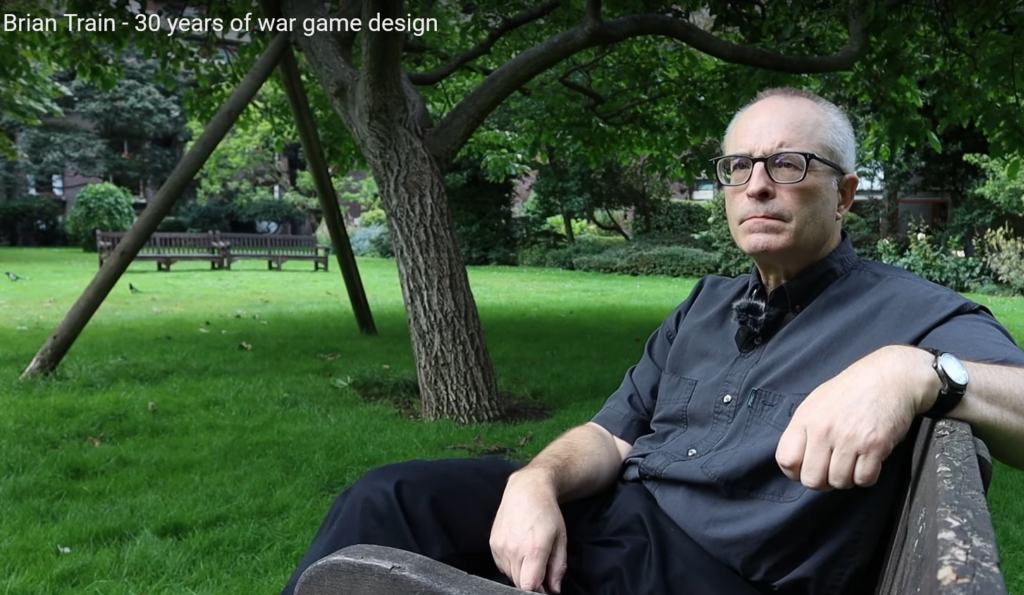
Partiamo con Brian Train, vi abbiamo un po’ parlato dei suoi lavori qui, adesso è venuto il momento di conoscerlo meglio. Ringraziamo Brian per la disponibilità e se avete curiosità non esitate a scriverle nei commenti. Brian, che ci legge in copia, sarà contento di rispondere.
Abbiamo sintetizzato l’intervista che trovate in inglese nella sua versione completa.
Ci puoi dire qualcosa su di te e sulla tua attività di wargame designer
Mi sono appassionato ai wargame alla fine degli anni ’70, quando il mio zio preferito mi regalò una copia di Tactics II di Avalon Hill. I primi due giochi che ho progettato sono stati Power Play, su un colpo di stato in un paese immaginario, e Civil Power, un gioco tattico sulla creazione e lo smantellamento di rivolte urbane. I miei giochi successivi riguardavano argomenti come la guerriglia urbana Tupamaro in Uruguay, la guerriglia Sendero Luminoso in Perù e l’intervento in Somalia. Ho iniziato a pubblicare formalmente i miei giochi attraverso una piccola azienda chiamata Microgame Design Group nel 1995 circa. E ora ho pubblicato circa 65 diversi progetti di giochi con circa una dozzina di aziende diverse.
La mia filosofia progettuale è questa: ho iniziato a progettare giochi perché nessuno progettava il tipo di giochi a cui volevo giocare, sul tipo di conflitti che volevo vedere; quindi prima di tutto soddisfo me stesso e i miei interessi. Non mi interessa molto se un gioco venderà bene, mi interessa solo che esplori un problema interessante in un modo che i giocatori lo trovino coinvolgente (e questo è anche il motivo per cui regalo i miei giochi)

Come scegli il periodo storico di un tuo gioco?
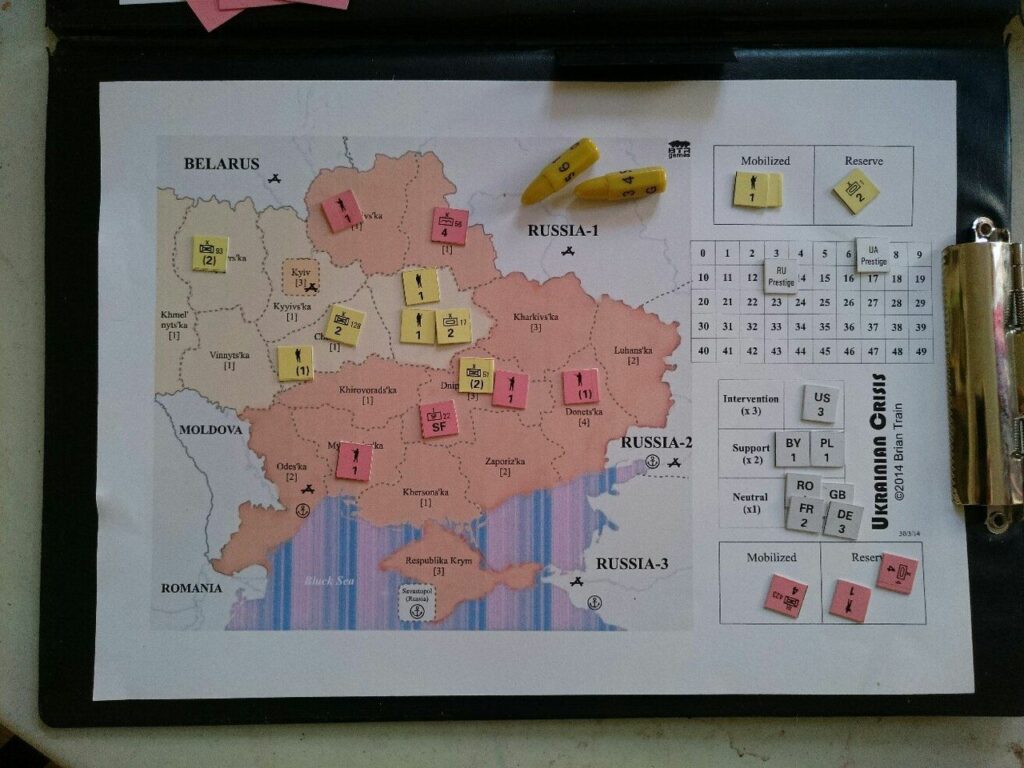
Normalmente lavoro in “tempi moderni” a causa del mio interesse personale a saperne di più su di questi, ricercando e costruendo modelli; poi li pubblico nella speranza che le persone provino il mio modello e imparino qualcosa sul mondo che li circonda. E, naturalmente, la modalità di conflitto recentemente (e forse per gran parte della storia) è l’insurrezione e la guerra irregolare, o almeno il conflitto altamente asimmetrico. Quando ho iniziato a progettare, ero una delle pochissime persone a lavorare su questo tipo di guerra. Un’idea che grido da un po’ è l’idea del “Game design come giornalismo partecipativo”. Questo è il genere di cose che sto cercando di fare con giochi progettati rapidamente ma giocabili come Battle of Seattle (2000) o Ukraine Crisis (2014) o Kashmir Crisis (2019). Uno dei primi giochi che ho progettato, più di 30 anni fa, si chiamava Civil Power ed era un gioco tattico sulle rivolte, sandbox a cui si possono ancora aggiungere scenari oggi.
Sono anche molto interessato al problema della guerra irregolare urbana. Penso che sia davvero urgente lavorare di più in quest’area, con la crescente urbanizzazione del pianeta e il collasso del governo civile e delle infrastrutture nel tentativo di affrontare questo processo, ulteriormente complicato dall’accelerazione del cambiamento climatico; personalmente ho già realizzato sei giochi su questo argomento e intendo farne di più in futuro.
Quanto è importante per un Wargame Designer conoscere il periodo storico in cui sta ‘progettando’ il suo gioco
Abbastanza importante, penso! Soprattutto se si ha l’intenzione di progettare un wargame con alcune pretese di storia e tentativo di realismo, piuttosto che un gioco da tavolo a cui è stato aggiunto un tema storico.

Quanto è difficile far collimare le Meccaniche con gli eventi storici?
L’unica cosa che un gioco deve essere in grado di fare è riprodurre il risultato storico che sta modellando. Tuttavia, il gioco dovrebbe anche essere in grado di dimostrare che altri risultati erano possibili, e che forse anche il risultato storico non era quello più probabile.
Finora ho pubblicato, o almeno completato, oltre 65 progetti. Circa la metà di essi appartiene ad un insieme di “famiglie” o sistemi di meccaniche che ho derivato nell’esplorare particolari tipi di conflitti (irregolari e asimmetrici). L’altra metà usa sistemi che non ho mai usato né prima né dopo: a volte vengono incorporati in altre famiglie, a volte rimangono semplicemente come esperimenti. Ad esempio, il sistema “4-box” è qualcosa che ho messo a punto per la guerra irregolare operativa/strategica in cui il supporto politico per gli antagonisti coinvolti è molto importante (infatti perdi la partita quando il supporto per la tua fazione si azzera). Questo sistema viene utilizzato da cinque giochi: Andartes (sulla Grecia degli anni ’40), Algeria (Algeria degli anni ’50), EOKA (Cipro degli anni ’50), Shining Path (Perù degli anni ’80 -’90) e Kandahar (Afghanistan degli anni 2000); tutti hanno la stessa meccanica di base, ma ognuno si gioca in modo diverso a causa di ciò che è stato dettato dalla politica, dai metodi e dalla geografia degli antagonisti. Un altro approccio basato sulle meccaniche che ho adottato nel tempo è quello con due sistemi, cioè l’avere un sistema di regole di base che copra le meccaniche di base e giochi “modulari” che dipendono da quell’ossatura di base. Ho preso questo approccio alla lettera in Brief Border Wars, in cui i quattro giochi (sulla guerra del calcio del 1969, sull’invasione turca di Cipro del 1974, sulla terza guerra dell’Indocina del 1979 e sulla seconda guerra del Libano del 2006) erano tutti venduti in un’unica scatola.

Raccontaci qualcosa di curioso su Volko Ruhnke e sul gioco che avete creato insieme
Ti riferisci A Distant Plain. Nel 2000 ho progettato un gioco sulla guerra francese d’Algeria e alla fine del 2007 sono stato invitato a una conferenza sull’analisi della guerra irregolare tenuta da giocatori e ricercatori professionisti, perché qualcuno aveva progettato il proprio gioco su un modello dell’insurrezione in Iraq usando il mio sistema di gioco come base. Mentre ero lì ho incontrato un insegnante nella scuola dove la CIA forma i suoi analisti, così io e lui abbiamo elaborato una versione più semplice del mio gioco Algeria, che avrebbe potuto usare nelle sue lezioni, era Volko! Partendo dal sistema a quattro riquadri ha avuto alcune idee che lo hanno aiutato quando stava lavorando su Andean Abyss, che è stato il primo volume del popolare sistema GMT COIN. Ci siamo re-incontrati, volevamo una sfida da fare insieme, quindi abbiamo scelto l’Afghanistan, mentre la guerra era ancora in corso; entrambi avevamo un’idea chiara e molto simile di ciò che volevamo che il gioco insegnasse o dimostrasse ai giocatori. Abbiamo avuto una lieve divergenza di opinioni sull’uso del terrore e abbiamo raggiunto un compromesso … facendo a modo suo! Successivamente, nel progettare Colonial Twilight ho applicato la mia interpretazione al concetto.
Nonostante le tante critiche, di ogni tipo, ricevute, penso che abbiamo fatto bene a farlo. Penso che se hai qualcosa da dire sul mondo in cui vivi, è importante uscire allo scoperto e dirlo, mostrare il tuo lavoro e la tua ricerca, spiegare il tuo pensiero e accettare le conseguenze e le interpretazioni che ne seguiranno, ecco ancora il game design come forma di giornalismo partecipativo.

A Distant Plain è esposto a National War Museum di Ottawa in Canada. Cosa ne pensi?
All’inizio avevo pensato di scherzare sul fatto che il gioco fosse una reliquia, adatta solo per essere esposta in una teca di vetro! Le persone probabilmente lo guarderanno e scuoteranno la testa, perché, probabilmente, non sanno che il gioco è stato progettato e pubblicato nel 2012-2013, ma sanno che la fine della guerra è avvenuta nel 2021. Il gioco è il prodotto di riflessioni e ricerche sul momento attuale in cui è stato concepito ed non ne abbiamo mai rivendicato un valore predittivo; i giocatori potrebbero essere tentati di condannarlo perché non è riuscito a modellare perfettamente la situazione 8 anni dopo la sua pubblicazione, una situazione che si è però verificata solo con eventi e accordi politici di meta-livello ben oltre la struttura del design del gioco originale,.
Quali sono i tuoi tre giochi migliori
È difficile rispondere. Mi piace scherzare sul fatto che “alcuni figli sono meno deludenti di altri”.
Guerrilla Checkers
ll gioco più semplice che abbia mai progettato, con le regole più brevi e i materiali più semplici. Eppure è un gioco con una certa profondità e dice qualcosa sulla guerra asimmetrica.
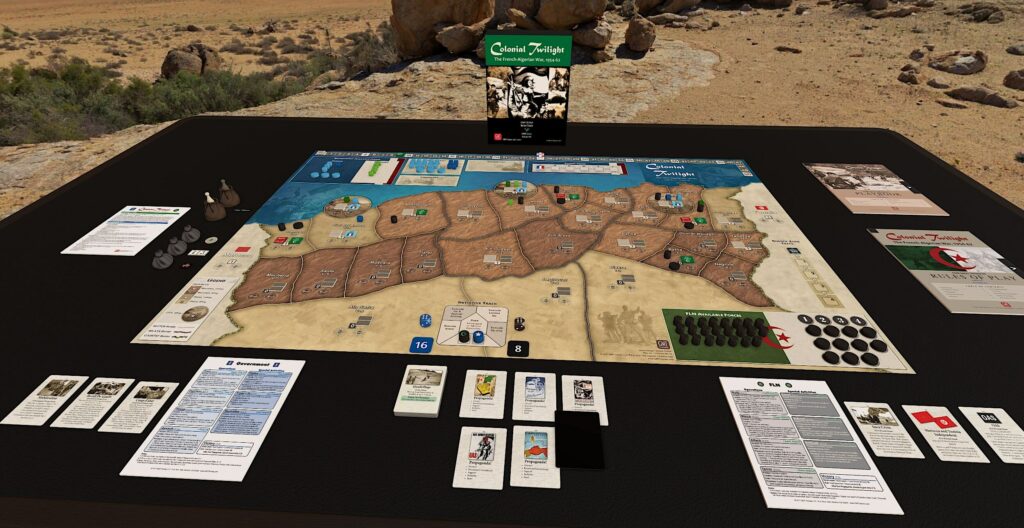
Colonial Twilight
Questo gioco ha risolto il “problema dei due corpi” per il sistema GMT COIN (anche se alcune persone pensano che non ci fossero problemi all’inizio). Questo è stato anche uno dei primi giochi in cui ho lavorato con uno sviluppatore di talento ed il gioco è stato molto migliorato; fino a quel momento avevo solitamente fatto tutto da solo nello sviluppo di un gioco.
District Commander Maracas
Questo è stato il primo di una serie di quattro (finora) giochi di controinsurrezione a livello operativo. Ha molte “parti in movimento” ma sono soddisfatto di quello che fa.
Qual è la tua TOP5 per i Wargame
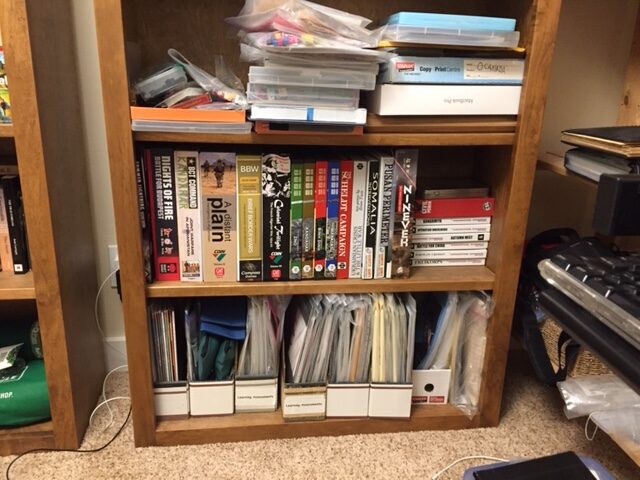
Elencherò i giochi che ho trovato più divertenti e stimolanti nel mio lavoro. Potrebbe essere strano che siano stati tutti pubblicati tra 35 e quasi 50 anni fa, ma queste sono state le mie prime ispirazioni di cui ho ancora molta nostalgia. Sicuramente ho giocato a molti giochi da allora, e avrebbero il loro posto in una lista, ma questi sono i miei primi cinque.
Minuteman: Second American Revolution (SPI 1976)
Questo gioco è uscito nel 1976, come uno della serie di giochi “Power Politics” progettati da James Dunnigan. Dunnigan è il mio designer preferito e una cosa che mi è sempre piaciuta di lui è stata la sua volontà di sperimentare, giocare con le idee e speculare sugli eventi passati e attuali. Questo gioco riguarda la crescita e il trionfo (o la sconfitta) di una rivoluzione su scala continentale negli Stati Uniti nel prossimo futuro.
Plot To Assassinate Hitler (SPI 1975)
Anche questo è stato progettato da James Dunnigan. Conteneva molte idee avanzate e insolite per l’epoca, che trovai molto stimolanti. Ad esempio la mappa di gioco: è una mappa esagonale ma è anche divisa in aree che rappresentano l’entroterra del Reich tedesco (Russia, Francia meridionale, Vaticano, ecc.) ai confini di un’unica grande area che rappresenta Berlino. Berlino contiene al suo interno diverse aree del quartier generale che fungono da località difese per le diverse parti nel gioco. Pertanto, avere due segnalini adiacenti sulla mappa non significa che siano fisicamente vicini l’uno all’altro, ma solo che sono “organizzativamente” in contatto e in grado di influenzarsi a vicenda.
Successivamente i segnalini del gioco: le unità nel gioco rappresentano individui di alto livello nella complessa e fratturata gerarchia che era il governo della Germania nazista. Ciascuno è valutato per la sua capacità di: organizzare, costringere o convincere altre persone; essere resistente a questi metodi; e “muoversi” a livello organizzativo e sociale per coinvolgere altri individui nelle trame. Una bella svolta sono le “pedine fedeltà”: avere una di queste per un particolare personaggio significa che sei sicuro della sua lealtà (visto che l’altro ragazzo ovviamente non ce l’ha), o offre l’opportunità di reclutarlo, o può essere usato per distrarre un personaggio nemico che sta infastidendo uno dei “tuoi” personaggi. Infine, il tempo è fortemente astratto in questo gioco. Un turno di gioco può coprire da due settimane a due anni. Il gioco culmina con un massimo di sei turni di colpo di stato, ognuno dei quali rappresenta solo 8-12 ore di azione e reazione.
Tutte queste idee mi sono sembrate strabilianti quando le ho incontrate in questo gioco, e ovviamente il gioco riguardava un colpo di stato, un argomento che ho trovato interessante per tutta la mia vita ma sul quale esistono pochissimi giochi.
South Africa (SPI 1975)
Questo era uno dei primi giochi sulla controinsurrezione che ho scoperto presto quando ho iniziato a giocare ai wargame, e l’ho trovato infinitamente interessante anche se a un giocatore (il governo dell’apartheid sudafricano) non è stato permesso di vincere la partita.
Oltre a un metodo interessante per cercare ed eludere il nemico, entrambi i giocatori devono adottare una visione più ampia, sviluppando e rafforzando la propria forza militare in un gioco che copre un periodo di dieci o più anni, con risorse scarse.
Tito and His Partisan Army: Yugoslavia 1941-45 (SPI 1980)
Questo è un wargame di cui ad alcuni wargamer piace ridere, perché era così impopolare al momento in cui è uscito. Si trattava di un argomento su cui non era mai stato progettato un gioco prima, e aveva una mappa di movimento dell’area dall’aspetto molto strano. Ho scoperto che questo gioco ha un modo insolito di astrarre il combattimento e il posizionamento sia di basso sia di alto livello e di modellare eventi che si svolgevano fuori dalla mappa e che influenzavano la campagna.
Nicaragua (3W 1989)
Questo gioco è stato il primo gioco completo pubblicato da Joe Miranda. È stato fondamentale per me in quanto mescolava azione politica e militare in un modo che pochissimi giochi avevano fatto fino a quel momento. Joe ha osservato di aver progettato Nicaragua come una confutazione al gioco di James McQuaid Central America, pubblicato da Victory Games, che affermava di riguardare il conflitto ma non aveva alcun contenuto politico.
Il gioco di Miranda era abbastanza diverso, trovo che io e lui fossimo sulla stessa lunghezza d’onda su molte cose. C’era quasi troppo in questo gioco, ma mi ha mostrato come la sfera politica e quella militare potessero essere integrate nei loro meccanismi ed effetti, il che alla fine dice molto di più su come il mondo funziona.
Qui potete leggere l’intervista completa (e lunga!) in originale
Hello Brian can you tell us something about you and your wargame designer activity
I got into wargaming in the late 1970s. Before that, I played much the same games as other kids, but I liked military-themed ones – RISK, Chess and so forth. But in 1978 when I was 15, my favourite uncle gave me a copy of Avalon Hill’s Tactics II for Christmas, and I was off! I don’t think my parents ever forgave him.
The late 70s and early 80s were the first great peak of board wargaming. I lived in a small city and didn’t have much pocket money, so it was hard to find the games on subjects I wanted to play, that is if those games had even been designed. Years later, in 1990, I was in Japan teaching English, and most of my game collection was on the other side of the ocean. So again, I wanted to play games, but none were available – but this time I had a computer and a printer. The first two games I designed were Power Play, about a coup d’etat in an imaginary country, and Civil Power, a tactical game about making and breaking urban riots. After I got back to Canada, I kept designing. My next few games were on topics like the Tupamaro urban guerrillas in Uruguay, the Sendero Luminoso (Shining Path) guerrillas in Peru, and the Somalia intervention. I started formally publishing my games through a small company called the Microgame Design Group in 1995 or so. And now I have published about 65 different game designs with about a dozen different companies.
My design philosophy is this: I started designing games because no one was designing the sort of games I wanted to play, on the sort of conflicts I wanted to see. So I please myself and my interests first. I don’t care very much about whether a game will sell well, just that it explores an interesting problem in a way that players find absorbing. This is also why I give away about a dozen of my games for free print-and-play.
How do you choose the historical period for your game
Normally I work in “modern times”. I think I have done only one game that takes place before 1910, it was about the 1848 revolutions across Europe. I design mostly on modern period or contemporary conflicts because of my personal interest in learning more about them, by researching and building models of them; then I publish them in the hopes that people will try my model and learn a bit about the world around them (or possibly disagree with me enough to go and do some independent reading and designing of their own!).
And of course, the default mode of conflict recently (and possibly for most of history) is insurgency and irregular warfare, or at least highly asymmetric conflict. At the time I started designing, I was one of a very few people working on this kind of war. I’m happy to say I have more company now, but this is still a very underserved area of game design. Even after 9/11 and the 20 years of war in Iraq and Afghanistan that followed, when you might expect there would be some interest in serious games on this kind of conflict, it just didn’t materialize. I soon came to the conclusion that while all wargamers are interested in history, and many may have an incredibly in-depth knowledge of certain periods of history, most are not that interested in current events.
An idea I have been yelling about for a while is the idea of “Game design as citizen journalism.” I have made a couple of presentations and written a bit about this. At one time not long ago there was a lot of talk about digital “newsgames” as a way for people to explore contemporary topics. But they did not become popular, and the fact remains that the practice of producing analog or analog newsgames predates digital games by a very long time and continues today. Many of them stand as more than just commemorative objects or ephemera; they are also examples of citizen-based social criticism and analytic journalism.
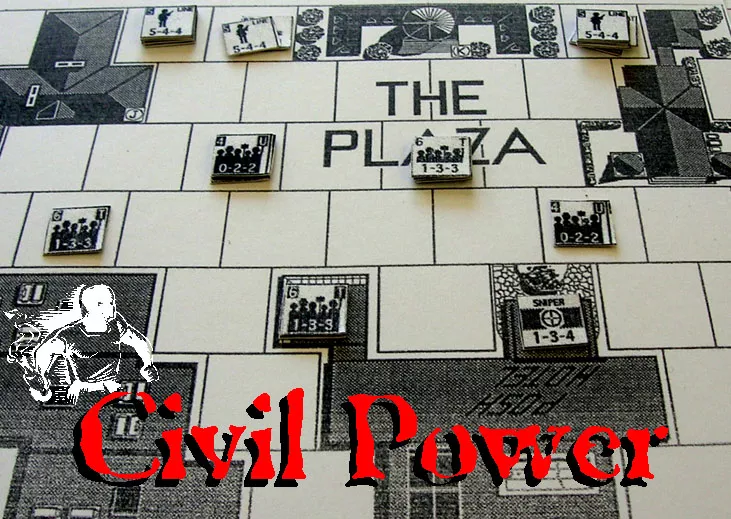
This is the sort of thing I am trying to do with quickly designed but playable games like Battle of Seattle (2000) or Ukrainian Crisis (2014) or Kashmir Crisis (2019). One of the first games I designed, over 30 years ago, was called Civil Power that was a tactical game about rioting. I would read a story in the day’s newspaper and come up with a game scenario for it; people can still do this with the game today because it’s a “sandbox” game. I’m also really interested in the problem of urban irregular warfare. I think it’s really urgent to do more work in this area, with the growing urbanization of the planet and the breakdown of civil government and infrastructure in trying to deal with this process, further complicated by accelerated climate change. But this topic is not addressed very well, even in the professional wargaming world. It seems to me that more interest in that world is directed towards the problems and tactics of kinetic formal conflict within large cities than on how I think conflict will probably play out in them – more Stalingrad than Mogadishu, put it that way. I’ve done six games on this topic and I intend to do more.
How important is it for a wargame designer to know very well the historical period of the games?
Quite important, I think! That is, if you are going to design a wargame with some pretensions of history and attempted realism, and not a board game that has an historical theme tacked on to it.
How difficult is designing the Mechanism of the game coherent with the history events?
The one thing a game must be able to do is reproduce the historical result it’s modelling. However, the game should also be able to show that other results were possible, and that maybe even the historical result was not the most probable one.
Games don’t have to be finely balanced to be enjoyable, and a lot of conflicts are not interesting enough when they are modelled too literally. But at the same time you want your players to learn something about the historical situation, so you cannot turn it into too much of a game – so I guess playability is more important, but it can be taken too far. This is of course a greater threat in games produced for the civilian market, which generally don’t have the same level of intent or content for serious analysis that a professional would need. So far I have published, or at least completed, over 65 designs. About half of them belong to one or another of a set of “families” or mechanical systems I have derived for exploring particular types of conflicts, though each one in the system can have great distance between it and others, depending on the situation. The other half use systems I never used before or since: sometimes they get incorporated into other families, sometimes they just stay as experiments.
For example, the “4-box” system is something I put together for operational/strategic irregular warfare where political support for the antagonists involved is very important (you lose the game when support for your side zeroes out). That system has five games using it: Andartes (on 1940s Greece), Algeria (1950s Algeria), EOKA (1950s Cyprus), Shining Path (1980s-90s Peru), and Kandahar (2000s Afghanistan). Each one has the same basic mechanics, but each one plays differently because of what was dictated by the politics, methods and geography of the antagonists – e.g. whether the insurgent had a foreign sanctuary, etc..
Another mechanical approach I have taken with two systems is to have a core rules system that covers the basic mechanics, and “module” games that depend on that core armature but are altered less than they would be in the 4-box system, but enough to give the game a different feel. Therefore the rules to these games are written as a set of exceptions, alterations and additions to the core rules, This general approach is like what Simulations Publications Inc., the original large-volume wargame publisher, did in the 1970s with their “Quadrigame” concept of four small games that depended on a set of standard rules.
I took this approach most literally in Brief Border Wars, in which the four games (on the Football War 1969, the Turkish invasion of Cyprus 1974, the Third Indochina War 1979, and the Second Lebanon War 2006) were all sold in one box. Brief Border Wars II, another volume of four more games, again using the same core system will be out in mid-2024 (Second Balkan War 1913, Teschen 1919, Nomonhan 1939, Italo-Greek War 1940). Also, four volumes of the District Commander series of boxed games on operational level counterinsurgency using diceless resolution systems were released individually over 2020-2021 and used some common components among them as well as common rules. Modules released were ZNO (Algeria 1959), Binh Dinh (Vietnam 1969), Kandahar (Afghanistan 2009), and Maracas (Fictional Large City 2019).

You designed a game with Volko Ruhnke. Can you tell us some curiosity and information about the game and how it is working with another game designer?
That game was A Distant Plain. In 2000 I designed a game on the French Algerian War, and at the end of 2007 I was invited to a conference on analysis of irregular warfare by professional wargamers and researchers, because someone had designed their own game on a model of the insurgency in Iraq using my game system as a base. While I was there I met someone who was a teacher at the school where the CIA trains its analysts. He and I worked out a simpler version of my Algeria game that he could use in his classes.
Volko Ruhnke who was also teaching there at the time saw him using this game and picked up a copy for himself for study. Parts of the 4-box system this game used helped him when he was working on Andean Abyss, which was the first volume in the popular GMT COIN system. By now, we are up to 2010-11, and after that game came out I got to meet Volko at another professional wargaming conference and we talked about working together. We wanted a challenge so we picked Afghanistan, while the war was still going on!
Up to this point in my career I had designed over 30 wargames but I hadn’t worked closely with any other designers. Volko was a great designer to work with; he was always willing to listen to my ideas and suggest practical solutions to problems that came up, and meanwhile we both had a clear and very similar idea of what we wanted the game to teach or prove to players. I don’t think you can ask for more than that.
We did have a mild difference of opinion about the use of terror, which in A Distant Plain is a discrete operation carried out by the two insurgent factions to reduce Support for the government and build Opposition to it. He favoured this interpretation; personally I subscribe to the work of the political scientist Stathis Kalyvas and others that the use of indiscriminate violence is counterproductive, and tends to suppress the tendency of non-combatants to support either side. We compromised by doing it his way! Later, in designing Colonial Twilight I applied my interpretation to the concept.
The reaction among wargamers was interesting when it became known that someone was going to do a published game on the war in Afghanistan. People thought we were variously brave, foolish or crass to come out with a game on the war before it was even over. The moment that A Distant Plain was announced for P500 on Boardgamegeek.com, in the absence of any facts about the game a thread popped up that petered out after around four days and 150 posts. People were accusing us of all kinds of things: we were shills for neoliberalism, we were Marxist America-haters, we were insensitive profit-seeking ghouls, etc. And so forth. (Also, because it was Boardgamegeek, about 2/3 of the way through someone posted specifically to tell us all that he had no experience of what we were discussing, no interest in the war in Afghanistan, and no intention to buy the game…). But I think we were right to do it. I think if you have something to say about the world you live in, it’s important to come right out and say it, to show your work and research explain your thinking, and take the consequences and interpretations that will follow. This goes back to my earlier comments about game design as a form of citizen journalism.

A Distant Plain is Exhibit at The National War Museum in Ottawa, Canada. What do you think about this?
At first I thought about making a joke about being a relic, fit only for showing in a glass case! People will probably look at it and shake their heads, because they probably do not know the game was designed and published in 2012-13 – but they do know the end of the war was in 2021. There is language in its playbook and the designer’s notes about how the game was a product of our thoughts and research up to 2012-13, and we did not claim any predictive value for it. We meant that.
I know that people might be tempted to condemn it because it could not perfectly model the situation 8 years after it was published, a situation that only came about with political meta-level events and arrangements far beyond the framework of the original game design, combined with what again in gamer terms would have been a lot of deliberately bad, bizarre and counter-productive play. So it goes, people will make up their own minds no matter what I say but I think it is a little unfair.

What are your best three games?
That’s hard to answer. I like to make the joke that “some children are less disappointing than others”.
Guerrilla Checkers
the simplest game I have ever designed, with the shortest rules and most basic equipment. Yet it is a game with some depth and it says something about asymmetric warfare.
Colonial Twilight
This game cracked the “two-body problem” for the GMT COIN system (although some people think that there was no problem to begin with). This was also one of the first games where I worked with a talented developer and the game was much improved for it; up to this point I had usually done everything on the game by myself.
District Commander Maracas
this was the first in a series of four (so far, it’s four) games on operational level counterinsurgency. It has a lot of “moving parts” but I am satisfied with what it does.
What is the TOP5 for war games (not yours)?
Well, I will list the games that I have found most enjoyable and inspiring to me in my work. Perhaps it’s strange that all of them were published between 35 and nearly 50 years ago, but these were my earliest inspirations for which I have a lot of nostalgia still. Certainly I have played a lot of games since then, and they would have their place on a list, but these are my top five.
Minuteman: Second American Revolution (SPI 1976)
This game came out in 1976, as one of the series of “Power Politics” games designed by James Dunnigan. Dunnigan is my favourite designer, and one thing I always liked about him was his willingness to experiment, play around with ideas and speculate about past and current events. This game is about the growth and triumph (or defeat) of a continental-wide revolution in the United States in the near future. I found it fascinating to build up an insurgency again and again, and devise ways to counter it – I spent a lot of time playing it in high school and university, while listening to The Clash or Talking Heads (“Life During Wartime”) on headphones.
The idea of a second Civil War is a persistent fever dream in American politics, and more than a few games have been designed on the subject. Personally I feel that the United States’ decline, if it ever gets to the point of sustained overt violence, will not be into such a massive revolution, or an organized civil war, or even a gigantic tribal Somalia – that’s a violence fantasy almost as removed as imagining a Nazi, Soviet or Asian occupation of the country. I think instead it could resemble that of the former Soviet Union and end up somewhat like a Mafia state as Russia is today – no widespread invasions or counteroffensives, just a long drawn-out slide into an immovable oligarchic kleptocracy where few are actually starving, but even fewer have much of a chance of advancement in the present order, and marked with spasmodic cycles of smaller scale violence like an America-wide Anni di Piombo. We’ll see. But meanwhile, Minuteman makes an interesting game.
Plot To Assassinate Hitler (SPI 1975)
This one was also designed by James Dunnigan. It had a lot of advanced and unusual ideas for the time, which I found very inspiring. For example the game map: it is a hex map but it is also divided into areas representing the hinterlands of the German Reich (Russian, Southern France, the Vatican, etc.) on the borders of a single large area representing Berlin. Berlin contains several HQ areas within it which serve as defended localities for the different parties in the game. Thus, having two counters adjacent on the map does not mean they are physically close to each other, only that they are “organizationally” in contact and able to influence each other. Next the game counters: the units in the game represent highly placed individuals in the complex and fractured hierarchy that was the government of Nazi Germany. Each is rated for its ability to: organize, coerce or convince other people; to be resistant to these methods; and to “move around” organizationally and socially to involve other individuals in plots. A nice twist is “loyalty chits”: having one of these for a particular character means you are sure of his loyalty (since the other guy obviously doesn’t have it), or it presents an opportunity to recruit him, or it can be used to divert an enemy character who is bothering one of “your” people.
Finally, time is heavily abstracted in this game. One game turn can cover anywhere from two weeks to two years. The game is climaxed by up to six coup turns, each of which represents only 8-12 hours of action and reaction. All of these ideas were mind-blowing to me when I encountered them in this game, and of course the game was about a coup d’etat, a topic that I have found interesting all my life but about which there are very few games.
South Africa (SPI 1975)
This was an early game on counterinsurgency that I found early on when I started to play wargames, and I found it endlessly interesting even though one player (the South African apartheid goverment) was not allowed to win the game. Along with an interesting method of seeking and evading the enemy, both players have to take the longer view of developing and building up their military strength over a game that covers a period of ten or more years, with scarce resources. I played this a lot and experimented with different approaches and force structures.
Tito and His Partisan Army: Yugoslavia 1941-45 (SPI 1980)
This is a wargame that some wargamers like to laugh at, because it was so unpopular at the time it came out. It was on a topic that had never had a game designed on it before, and it had a very strange-looking area movement map that bothered some people a lot. It proved to me that some wargamers are inherently conservative and unwilling to make the effort to understand new ideas and explore new topics. I mean, everyone should be able to enjoy the things they like without judgement, and opinions are awfully cheap and worth exactly what you pay for them. But I found this game to have an unusual way of abstracting both low and high level combat and positioning, and of modeling events that were taking place off the map that affected the campaign. I was patient with it and I played it a lot.
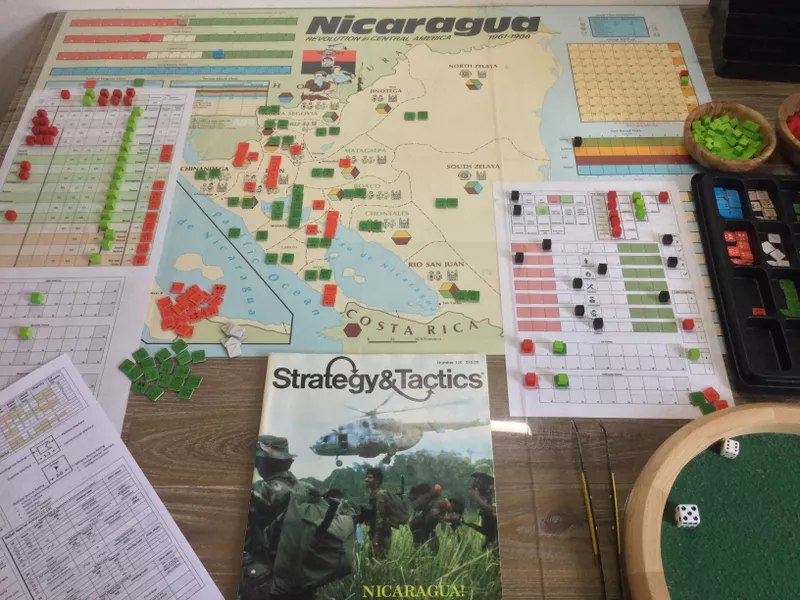
Nicaragua (3W 1989)
This game was Joe Miranda’s first published complete game. It was seminal for me in that it mixed political and military action in a way that very few games had done up to that point. Joe remarked that he had designed Nicaragua as a rebuttal to James McQuaid’s game Central America, published by Victory Games, that claimed to be about the conflict but had no political content at all. I played McQuaid’s game and I had to agree – to me, it was a long, wheezy, convoluted exercise in trying to figure out the optimum number of B-52 strikes or Marine brigades required to shatter the Cuban tank divisions that were lurking on the border with Honduras, gassing up for the long drive to the Texas border. Miranda’s game was quite different, I find he and I have been on the same wavelength about a lot of things. There was almost too much in this game, and all of it jiggling and shaking at the same time, but it showed me how the political and military spheres could be integrated in their mechanisms and effects, which in the end says a lot more about how the world works.
Se ti va di sostenerci, puoi fare i tuoi acquisti su DungeonDice.it